
Rabbeinu Shabsai HaKohen · 1621–1663

כִּי שִׂפְתֵי כֹהֵן יִשְׁמְרוּ דַעַת וְתוֹרָה יְבַקְשׁוּ מִפִּיהוּ 

Malachi 2:7 — the pasuk the sefer is named for

He lived forty-one years. In those years he wrote a sefer that lies before every moreh hora’ah to this day — and lived through Tach V’Tat, the wars, and a road from Lita to Mehrin.

  1. שפ״א1621Lita

    Born

    Born to R’ Meir HaKohen, a talmid chacham, who was his first rebbi. In Amstibove, they say; others say in Vilna.

  2. שצ״ג1633Tiktin · Krakow · Lublin

    In Yeshiva

    At twelve he goes to learn in the yeshiva of R’ Yehoshua Heschel in Tiktin, and later he learns in Krakow and in Lublin.

  3. ת״אc. 1641Vilna

    Marriage, and the Beis Din of Vilna

    He marries Yenta Leah, daughter of R’ Shimon Wolf, a wealthy man of Vilna and a descendant of the Rema. Still young, he is seated on the Beis Din of Vilna, beside R’ Moshe Lima, the Chelkas Mechokek.

  4. ת״ו1646Krakow

    The Shach on Yoreh De’ah

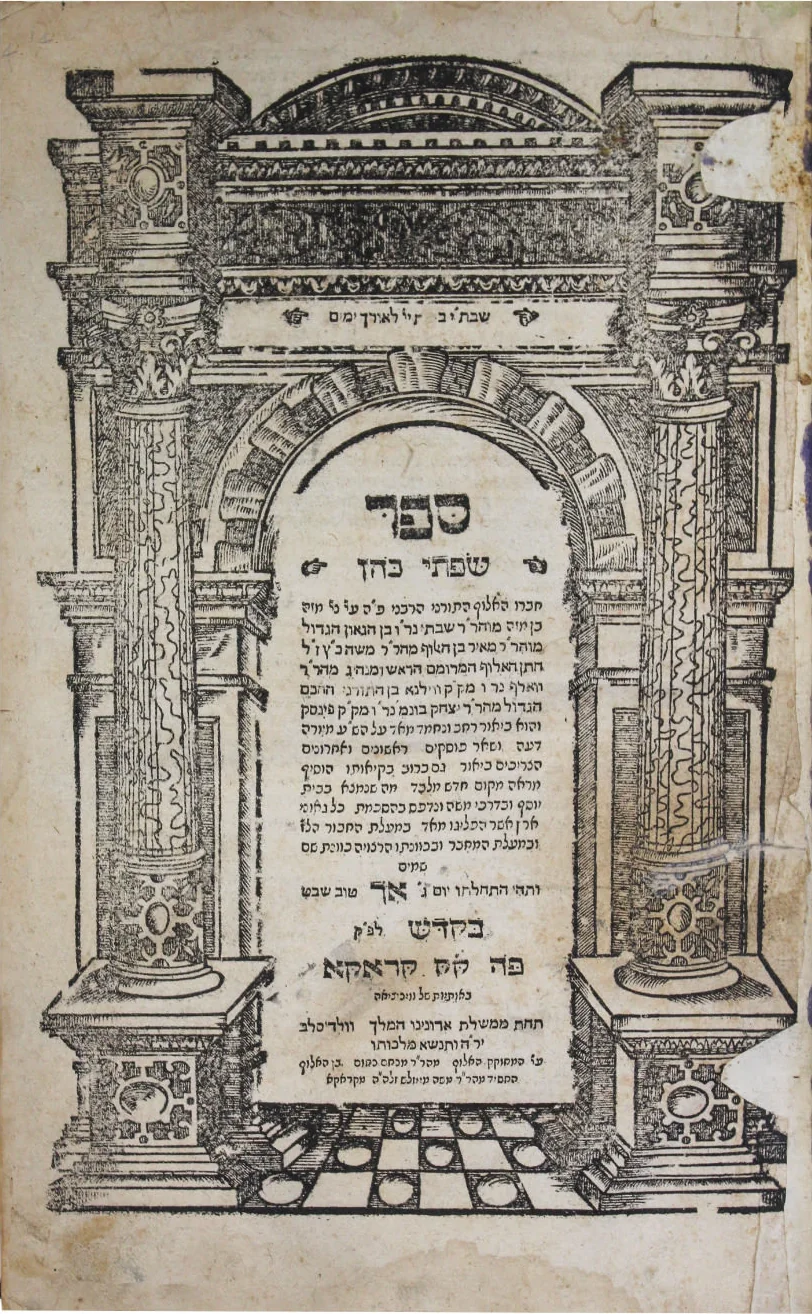
    At twenty-four he prints “Siftei Kohen” on Yoreh De’ah, with the haskamos of the gedolei hador. It is the only edition he prepared himself — and two years later the gezeiros of Tach destroyed most of the copies.

    The title page →
  5. ת״ח–ת״ט1648–1649Poland and Ukraine

    Tach V’Tat

    Chmielnicki’s Cossacks destroy kehilla after kehilla. The Shach writes selichos and a kinah on the tragedy, and takes upon himself and his children to fast on the 20th of Sivan. The selichos are printed in Amsterdam, 1651.

    20 Sivan — the Shach’s taanis →
  6. תט״ו1655Vilna · Lublin · Prague

    Fleeing Vilna

    When the Russians take Vilna, he flees with the city’s Jews. He comes to Lublin, and when the war follows him there too — on to Prague.

    From Vilna to Holešov →
  7. תט״ו–תכ״ג1655–1663Strassnitz · Holešov

    Rav in Mehrin

    He becomes Rav of Strassnitz, a small town in Mehrin, and from there he is called to Holešov. The shul in Holešov carries his name to this day — Šachova synagoga.

    The shul today →
  8. תכ״ג1663Holešov

    Nistalek

    On Rosh Chodesh Adar 1663 he was nistalek, forty-one years old, and was buried in the Beis HaChaim of Holešov. That same year his Shach on Choshen Mishpat comes out, in Amsterdam.

    The holy matzeva (3D) →
  9. תל״ז–ת״פ1677–1720Frankfurt an der Oder · Dessau · Jessnitz

    The Sefarim After Him

    His other writings are printed after his histalkus: Nekudos HaKesef and Tokfo Kohen, and later Gevuras Anashim — brought to print by his grandson R’ Yitzchak, son of his son R’ Moshe.

02Witnesses from Those Days

Vilna, Tammuz 1655

In Tammuz 1655 the Russians and the Cossacks fall upon Vilna. Great geonim were living in the city then: the Shach; R’ Moshe Rivkes, the Be’er HaGolah — an ancestor of the Gra; R’ Ephraim HaKohen, the Shaar Ephraim — grandfather of the Chacham Tzvi; and R’ Aharon Shmuel Kaidanover, the Birkas HaZevach.

They fled with the whole kehilla. The Be’er HaGolah wrote down those days with his own pen — and the Shach himself had already mourned the gezeiros of Tach V’Tat and the refugees, in “Megillas Eifah”. These are their words, as they stand.

The Be’er HaGolah — the kehilla flees
וביום ד׳ כ״ג לתמוז שנת תט״ו נמלטו על נפשם ויצאו מן העיר כמעט כל הקהל כאחד, את אשר הכינו להם סוסים ועגלות יצאו טעונות עם נשותיהם בניהם ובנותיהם וקצת מנכסיהם, ואשר לא הכינו יצאו ברגליהם ומשארותם בניהם הקטנים על כתפיהם.
הקדמת באר הגולה, חלק אורח חיים

Wednesday, 23 Tammuz — the whole kehilla of Vilna leaves the city: whoever has a wagon rides; whoever does not walks, with the small children on their shoulders.

The Be’er HaGolah — his own road
במקלי בימני יצאתי, וכיס תפילין אחזתי, ובשמאלי ספר עברונות תפסתי, הרהורי דברים על לבי העליתי, מי יודע איפה אשכונה בגלותי... את ביתי מלא כל טוב עזבתי ונטשתי את נחלתי... והתהלכנו באשר התהלכנו, ותבקע הארץ לקול המית הבוכים, וגם עיני נגרה ולא תדמע כמים הנשפכים.
הקדמת באר הגולה, חלק אורח חיים

The next day he goes himself: in one hand his staff and his tefillin bag, in the other a calendar. His house and his sefarim stay behind.

The Shach — on the refugees
ויתר פליטת ישראל הנמלטים... נשארו בערום ובחסר כל בידים ריקנים, והעשירים אשר היו עלי תולע אמונים יצאו נקי מנכסיהם ונעשו דלים ואביונים... עניים ודווים וסחופים ועיפים ועטופים ברעב ומוכפנים, שואלים ללחם ואין פורש, ואין כ״ל ואין כסף ואין עונים, הולכים ושטים ומכתתים רגליהם מעיר לעיר, לכל צד הם פונים לבקש עזרה מאחיהם בית ישראל.
מגילת עיפה, הקדמת הש״ך לסליחות · אמשטרדם תי״א

Those who escaped the Cossacks are left naked and empty-handed — even those who had been wealthy. Hungry and weary, they wander from town to town to ask their brethren for help.

The Shach — the fast of 20 Sivan
על כן קבעתי לעצמי ולדורותי לבנים ולבני בנים יום צום ותענית ואבל ומספד וקינים ביום כ׳ לחדש סיון... יען כי יום זה היא תחלה לגזרות ומכאובות... וחברתי סליחות והקינות בבכי ותחנונים לאומרם ביום זה בכל שנה ושנה.
מגילת עיפה, הקדמת הש״ך לסליחות · אמשטרדם תי״א

He takes upon himself and his children and grandchildren a fast on 20 Sivan: the gezeiros began on that day, the gezeira of 1171 was on that day too, and it never falls on Shabbos. Later the Vaad Arba Aratzos accepted it for all of Poland.

The Be’er HaGolah as given by Shmuel Yosef Fuenn, “Kiryah Ne’emanah” (Vilna 1860); the Shach from “Megillas Eifah”, as printed with “Shevet Yehudah” (Hannover 1855).

03His Holy Sefarim

Holy Sefarim of the Shach

Each sefer with the title page of its first edition — as it came off the press.

First editionKrakowת״ו1646

שפתי כהן על יורה דעה

On Shulchan Aruch, Yoreh De’ah

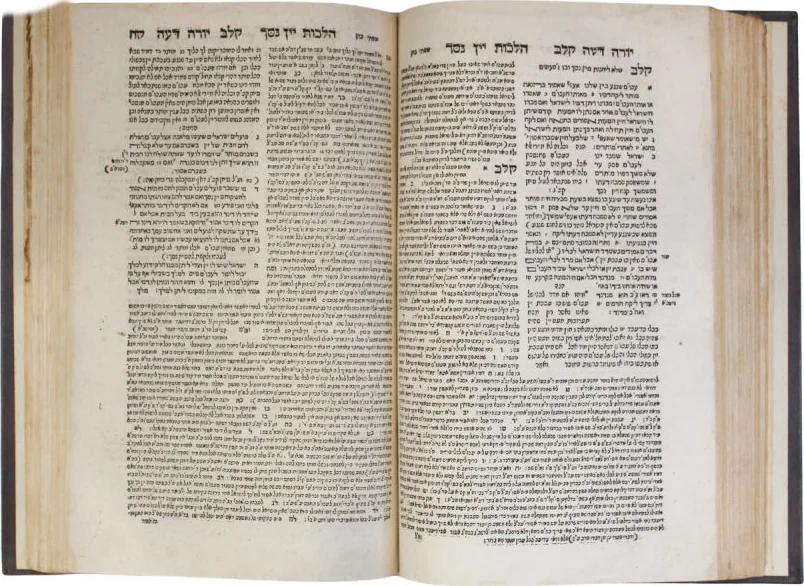
The sefer that gave him his name: “Shach” is the roshei teivos of Siftei Kohen. He comments on each se’if of the Mechaber and Rema, cites the sources, and issues halachic rulings. Accompanying it is a treatise: Dinei Sfek Sfeka B’Kitzur.

He wrote it by the age of twenty-four. Today it stands on the page of the Shulchan Aruch, beside the Taz — and halacha is decided according to it to this day.

Photo: Genazym

First editionAmsterdamתכ״ג1663

שפתי כהן על חושן משפט

On Shulchan Aruch, Choshen Mishpat

The second part, on dinei mamonos, with a treatise on the laws of migo. It was published in Amsterdam, the year the Shach passed away.

Photo: Winners

First editionAmsterdamתי״א1651

סליחות על גזירות ת״ח ות״ט

Selichos and a kinah on Tach V’Tat

Selichos for the 20th of Sivan, with an introduction recounting what transpired in each town — one of the most important testimonies of those years. Later it was called “Megillas Eifah.”

On the title page: “On the evil gezeiros that befell, for our many sins, in Ukraine, Volhynia, Podolia and Lita” — printed in Amsterdam by Immanuel Benveniste.

Photo: Kedem

First editionFrankfurt an der Oderתל״ז1677

נקודות הכסף

Challenges to the Taz, Yoreh De’ah

The Shach examines the Taz on Yoreh De’ah and questions his rulings. In the foreword he writes that it did not stem from discord — between them was fulfilled “es vahev b’sufa.”

The name comes from the same pasuk as the Taz’s “Turei Zahav”: “We will make you rows of gold with points of silver” (Shir HaShirim 1:11) — and that pasuk is at the foot of the title page. It also says there that he finished it in Vilna.

Photo: Genazym

First editionFrankfurt an der Oderתל״ז1677

תקפו כהן

Principles of monetary law

Principles for when a halachic dispute remains unresolved (teiku), when poskim differ, and the rules of “kim li.” So the title page reads: “Klalei dinim al teiku u’plugta d’rabvasa…”.

Photo: Winners

First editionDessauתנ״ז1697

גבורת אנשים

On Shulchan Aruch, Even HaEzer 154

His only sefer on Even HaEzer, on a single siman. His grandson R’ Yitzchak ben R’ Moshe Katz brought it to print, with his own foreword — “printed here in Dessau, in Amsterdam type.”

Photo: Winners

ספרפועל צדקת״פNo picture of the first edition yet
First editionJessnitzת״פ1720

פועל צדק

The 613 mitzvos

An ordering of all 613 mitzvos, short and clear — to know what each mitzva is.

On the Page of the Shulchan Aruch

From his own pen in the margin, to the printed page that is learned today.

Manuscript

הגהות הש״ך בכתב ידו

On Shulchan Aruch, Choshen Mishpat · Hilchos Halva’ah

A page of a printed Shulchan Aruch Choshen Mishpat — the end of siman 72 and the start of 73 — with the Sma beside it. In the margins and between the lines: the Shach’s glosses, in his own hand.

Prague · 1694

אשלי רברבי

Shulchan Aruch Yoreh De’ah, with the Taz and the Shach

The first Shulchan Aruch printed with the Taz and the Shach together on the page — thirty-one years after the Shach was nistalek. That is how Yoreh De’ah is learned to this day.

On the title page: “printed here in the holy community of Prague.” The name “Ashlei Ravrevei” — the great trees — stayed with the Shulchan Aruch and its nos’ei keilim, and it was printed again and again after.

Photo: HebrewBooks (YIVO)

04Donate

Lay a Brick
by the Shach

Every dollar becomes a brick in the building beside the Tziyun — a place where Jews will learn, daven, and rest, and where Kohanim will finally be able to stand before the Shach. The zechus remains yours for generations. Your receipt arrives right away by email.

For a dedication or any question: 347.389.2180

Tax ID 39-3019992

Card number
CVV
Charity cards work too:OJC FundThe Donors' FundPledger