The Tziyun of the Shach
At the Tziyun · Holešov

זֵכֶר צַדִּיק לִבְרָכָה 

A seder for davening at the holy Tziyun of the Shach zy"a — what to say, when, and why — and stories from his life, from Vilna to Holešov.

01Bracha
02Tehillim
03Personal Prayer
04Stories
01Preparation for Tefillah

Guidelines & Halachos

01

Kohanim

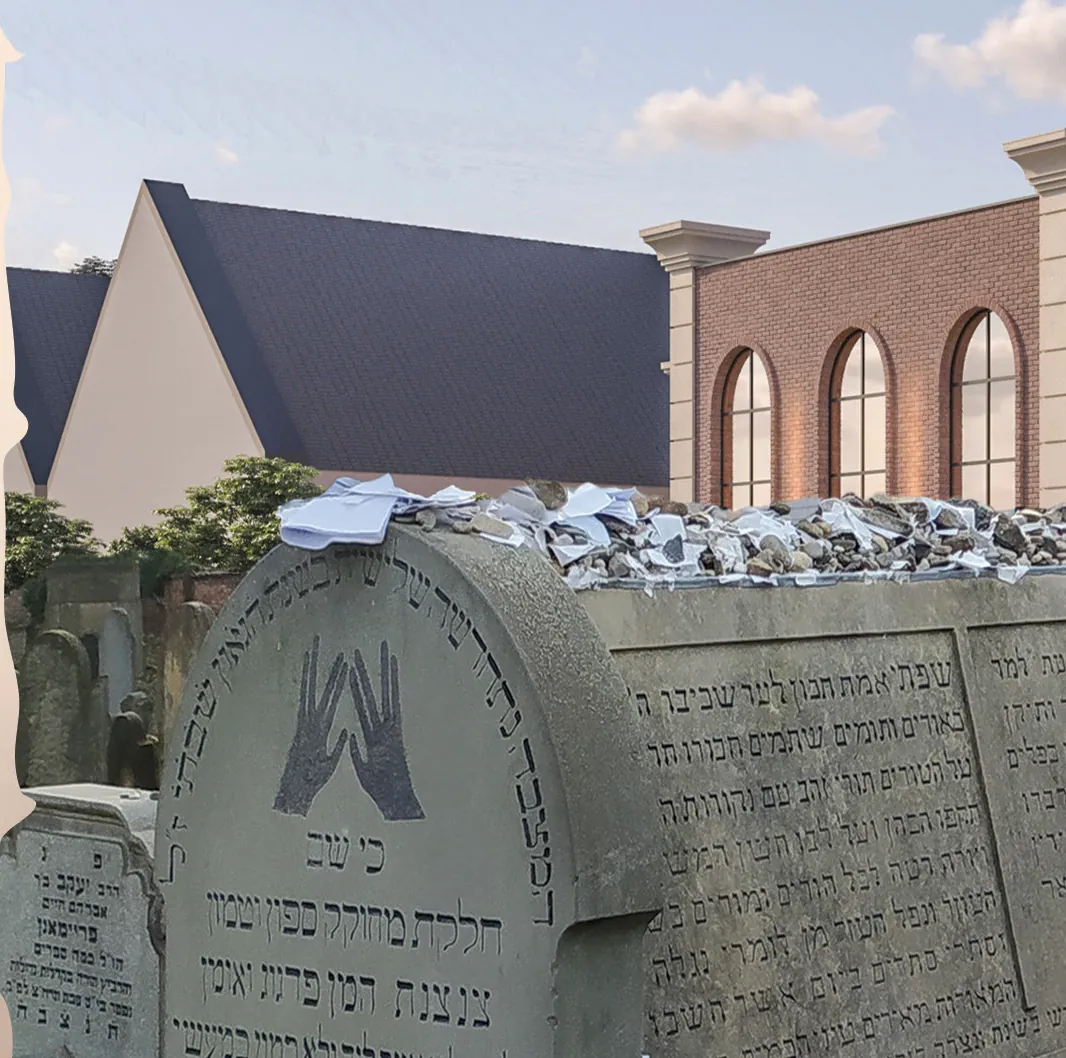
A Kohen does not go into the Beis HaChaim, nor within four amos of a kever. That is why the Heichal HaKohanim is being built — a window to the Tziyun a Kohen can daven from.

The Heichal HaKohanim →
02

Whom We Ask

We daven to the Ribbono Shel Olam alone, that He help in the zechus of the tzaddik — not to the tzaddik. So writes the Maharil (below).

03

When Not

One doesn't visit kevarim on Chol HaMoed, and doesn't go to the same kever twice in one day (Magen Avraham 581).

04

On the Way Out

Leave a small stone on the kever, and wash your hands when you leave the Beis HaChaim.

״והמשתטח על קברי הצדיקים ומתפלל, אל ישים מגמתו נגד המתים השוכבים שם, אך יבקש מאת השם יתברך שיתן אליו רחמים בזכות הצדיקים שוכני עפר.״

One who davens at kivrei tzaddikim should not turn his tefilla to the meisim resting there, but ask of Hashem Yisborach to have mercy on him in the zechus of the tzaddikim.

— Sefer Maharil, Minhagim
02Seder HaTefilla

What to Say at the Tziyun

Following the Gesher HaChaim and the siddur. Every family has its minhag — ask your Rav.

  1. 1Step 1

    On Arriving

    Whoever hasn't been in a Beis HaChaim for thirty days makes a bracha on coming within four amos of the kevarim. Then say “Atah Gibor”.

    Brachos 58b · Rambam, Hilchos Brachos 10:10

    בָּרוּךְ אַתָּה יְיָ אֱלֹהֵֽינוּ מֶֽלֶךְ הָעוֹלָם, אֲשֶׁר יָצַר אֶתְכֶם בַּדִּין וְזָן אֶתְכֶם בַּדִּין וְכִלְכֵּל אֶתְכֶם בַּדִּין, וְהֵמִית אֶתְכֶם בַּדִּין, וְיוֹדֵֽעַ מִסְפַּר כֻּלְּכֶם בַּדִּין, וְעָתִיד לְהַחֲזִיר ולְהַחֲיוֹתְכֶם בַּדִּין. בָּרוּךְ אַתָּה יְיָ, מְחַיֵּה הַמֵּתִים.
    אַתָּה גִבּוֹר לְעוֹלָם, אֲדֹנָי; מְחַיֵּה מֵתִים אַתָּה, רַב לְהוֹשִֽֽׁיעַ: מְכַלְכֵּל חַיִּים בְּחֶֽסֶד. מְחַיֵּה מֵתִים בְּרַחֲמִים רַבִּים. סוֹמֵךְ נוֹפְלִים וְרוֹפֵא חוֹלִים. וּמַתִּיר אֲסוּרִים. וּמְקַיֵּם אֱמוּנָתוֹ לִישֵׁנֵי עָפָר. מִי כָמֽוֹךָ בַּעַל גְּבוּרוֹת וּמִי דּֽוֹמֶה לָךְ. מֶֽלֶךְ מֵמִית וּמְחַיֶּה וּמַצְמִֽיחַ יְשׁוּעָה.
  2. 2Step 2

    At the Tziyun

    At the Tziyun, place your left hand on the kever and say the pasuk “V’nacha’cha”, “Tishkav B’shalom”, and the “Yehi Ratzon” with the Shach’s name.

    Yeshaya 58:11–12 · Be'er Heitev, Orach Chaim 224

    וְנָחֲךָ יְהֹוָה תָּמִיד וְהִשְׂבִּיעַ בְּצַחְצָחוֹת נַפְשֶׁךָ וְעַצְמֹתֶיךָ יַחֲלִיץ וְהָיִיתָ כְּגַן רָוֶה וּכְמוֹצָא מַיִם אֲשֶׁר לֹא יְכַזְּבוּ מֵימָיו. וּבָנוּ מִמְּךָ חׇרְבוֹת עוֹלָם מוֹסְדֵי דוֹר וָדוֹר תְּקוֹמֵם וְקֹרָא לְךָ גֹּדֵר פֶּרֶץ מְשֹׁבֵב נְתִיבוֹת לָשָׁבֶת.
    תִּשְׁכַּב בְּשָׁלוֹם וְתָנֽוּחַ בְּשָׁלוֹם עַד בֹּא מְנַחֵם מַשְׁמִֽיעַ שָׁלוֹם.
    יְהִי רָצוֹן שֶׁתְּהֵא מְנוּחָתוֹ שֶׁל רַבֵּנוּ שַׁבְּתַי בֶּן רַבִּי מֵאִיר הַכֹּהֵן בְּכָבוֹד וּזְכוּתוֹ יַעֲמוֹד לִי
  3. 3Step 3

    Shalom Alecha

    A greeting to the tzaddik, from the siddur — mentioning his name.

    From the siddur, Tefilla at Kivrei Tzaddikim

    שלום עליך מורינו ורבינו רבינו שבתי בן רבי מאיר הכהן, תהי נפשך ונפשות תלמידיך צרורה בצרור החיים. שלום עליך ועל משכביך, אשריך בעולם הזה וטוב לך לעולם הבא, אשריך שזכית ללכת אחרי יוצרך לעבדו בלבב שלם, וזכית והצדקת את הרבים והרית חוק ומשפט בישראל. על כן גדול שכרך וישבת במעלת הצדיקים עם המלאכים הקדושים אשר שם אצל בני עליון. הרחמן יחיש תחייתך ויזכינו לראות פניך, וזוהר יקרך אשר הוא מאיר ומזהיר כזוהר הרקיע, ויעמוד לנו זכותך וצדקתך וזכות תורתך בעת ובעונה הזאת, וזכותך וזכות תומתך וענוותנותך תגן בעדינו ותסייענו, ותעמוד מליץ טוב בינינו לבין אלוהינו, שיפתח לבבנו הערל בסודות תורתו, ואהבת חסד והצנע לכת עם אלוהינו, ויצליחנו בכל דרכינו, ואל ישלטו בנו אויבינו, ואל ייתן למוט רגלינו, ונהיה במחיצת הצדיקים נוחלי שני עולמות, אמן סלה.
  4. 4Step 4

    Tehillim

    Seven kapitlach of Tehillim: 33, 16, 17, 72, 91, 104, 130.

    Gesher HaChaim · minhag Yerushalayim

  5. 5Step 5

    Kapitel 119

    From kapitel 119 — the pesukim of the letters of his name, Shabsai (ש·ב·ת·י), then the letters of Neshama (נ·ש·מ·ה).

    Gesher HaChaim

  6. 6Step 6

    Tefilla at Kivrei Tzaddikim

    The siddur’s tefilla for kivrei tzaddikim. At “uvifrat lacholeh” mention the name of a choleh.

    Tefillos for the Beis HaChaim

  7. 7Step 7

    Personal Supplication

    Now is the time to ask — for yourself, your family and Klal Yisroel, in your own words. Whoever brought kvittlach reads them out here.

    Coming Back to Thank

    The Tchebiner Rav zt"l was an einikel of the Shach, and his family had a kabbalah: whoever needs a yeshua should come to daven at the Tziyun of the Shach — and can expect to see one. And once Hashem helps, he should come back to the Tziyun to thank Hashem, and the Shach for being a meilitz yosher.

    Many Yidden have the minhag — and especially at the Tziyun of the Shach — to say while davening, bli neder: when Hashem helps me, I will come back to the Tziyun to give thanks. A great many have seen big yeshuos here, and came back with a hoda’ah.

    Like Yaakov Avinu, who took it upon himself in his time of trouble, and came back to Beis El to fulfil his neder. Say “bli neder” — and when the yeshua comes, don’t delay.

    The kabbalah: from the family of the Tchebiner Rav zt"l · Bereishis Rabba 70:1 (“so that they vow in their time of trouble”) · Shulchan Aruch YD 203:2, 4, 5 · Rashi, Bereishis 35:1

    Saw a yeshua? Write to us →
    Submit a kvittel — it will be read at the Tziyun→
01Vilna · at five years old

A Question in Cheder

In cheder they were learning Parshas Chayei Sarah with Rashi. On the pasuk “I came today to the spring” Rashi says: “Today I set out and today I arrived — the road shrank for him.” Eliezer arrived in one day, through a miracle.

One boy asked: how could Eliezer tell Rivka’s family such a wondrous thing — who would believe him? The rebbe had no answer.

Little Shabsai stood up: further on Rashi says Eliezer showed them a deed in which Avraham signed everything over to Yitzchak. The deed was written the very day he left — so they could see he had indeed arrived through a miracle.

Source:Hevrat Pinto, “Rabbi Shabtai HaKohen — the Shach”

02So deep in learning

Across the Rooftops

Once the Shach went up on the roof of the house to learn alone, in quiet. Deep in thought he began to walk, and forgetting where he stood he crossed from one roof to the next — passing over the gaps between the houses miraculously.

Below, people gathered, astonished and trembling that something might happen. The Shach himself knew nothing of it.

Source:Sefer HaZichronos (the Previous Lubavitcher Rebbe), ch. 40

03His son, R’ Moshe

One Day’s Chiddushim

The Shach’s son, R’ Moshe, fell gravely ill. His father davened, but he only grew worse, until he lay at the gates of death.

The Shach stood and declared that he was dedicating for his son the merit of every chiddush in Torah he had innovated that day. At once the patient began to recover.

Source:Sefer HaZichronos, ibid.

04The Taz visits the Shach

“Torah Seeks Out Its Lodging”

The Shach wrote Nekudos HaKesef, challenges to the Taz — but in the introduction he writes that no one should think it came from discord: between them was fulfilled “es vahev b’sufa” — love in the end.

The Taz, the elder gaon, came to him and stayed three days. The Shach honored him beyond belief, and the Taz honored him too — until he kissed him on the head and rejoiced with him like at a Simchas Beis HaSho’eva.

They say the Taz then asked him how he writes. The Shach answered: by day I learn, by night I write — and in the morning I go over what I wrote and erase a great deal, until only the best and truest remains. The Taz kissed him on the head and said: I am sure halacha will be decided according to your sefer.

Source:Introduction to Nekudos HaKesef; the conversation — Hevrat Pinto

05Kalisch · with the Magen Avraham

“I Command It to Wait”

Once the Shach came to Kalisch and gave a drasha. The Magen Avraham came to hear it, and afterwards sent a student to the Shach with a challenging question — and coached him how to carry the discussion further.

The Shach enjoyed the analysis. But when he began speaking with him about other things, the student let slip that he was only a messenger. “For whom?” — “For the Magen Avraham.” The Shach asked him to come, and the two sat long in divrei Torah.

In the middle, the innkeeper knocked: “Rebbe, you must leave — a dying man lies in the house.” A Kohen may not be under one roof with the deceased. The Shach rolled up his right sleeve, knocked on the table and said: “Ani metzaveh l’chakos” — I command it to wait. He went on talking with the Magen Avraham, and only when they had finished did he leave. Immediately after, the sick man passed away.

Source:B’tzilo Chimadti — from the Tchebiner Rav, from his uncle R’ Yitzchok Rapaport, from the Avnei Nezer

06Gezeiros Tach V’Tat

The Twentieth of Sivan

In the years 1648–49 Chmielnicki’s Cossacks swept through Ukraine and Poland, destroying kehilla after kehilla — Nemirov, Tulchin, Uman. The Shach was a young man, and he saw it all.

He wrote “Megillas Eifah” — a kinah on the tragedy — and selichos. And he took upon himself and his children to fast on the 20th of Sivan, the day Nemirov was destroyed. The Vaad Arba Aratzos later adopted it as a fast day for the Jews of all Poland.

Source:Megillas Eifah (Amsterdam, 1651)

071655 · fleeing VilnaAs it is told

The Daughter in the Forest

When the Russians took Vilna, the Shach fled with his small, sick daughter. In the frost of the forest he thought she had died — and when he heard horses and dogs, he hid. When he came back, she was gone.

It was a nobleman out hunting who found her, revived her and raised her as a princess. She kept her Yiddishkeit in secret, and years later the Shach found her again and knew her.

Source:A historic narrative; R’ Meir Lehmann wrote it up as the novel “Bas HaShach”

081655–1663

From Vilna to Holešov

On Thursday, 24 Tammuz 1655, the Shach fled Vilna together with all the city’s Jews. He came to Lublin — and there too the war followed him: on the first day of Sukkos soldiers killed many Jews. Again he fled, to Prague.

He who had sat on the Beis Din of Vilna became Rav of Strassnitz, a small town in Mehrin. From there he was called to Holešov. There he was nistalek on Rosh Chodesh Adar 1663 — forty-one years old.

Source:Wikipedia; Radio Prague; VIN News

Did you experience a yeshuah at the Tziyun?

Write your story here, as chizuk for others. The vaad looks it over, and then it goes up on this page.

Only the vaad sees your name and phone — so they can confirm the story. The page shows only what you choose below.

What should appear under the story?

It will read:…

05Donate

Lay a Brick
by the Shach

Every dollar becomes a brick in the building beside the Tziyun — a place where Jews will learn, daven, and rest, and where Kohanim will finally be able to stand before the Shach. The zechus remains yours for generations. Your receipt arrives right away by email.

For a dedication or any question: 347.389.2180

Tax ID 39-3019992

Card number
CVV
Charity cards work too:OJC FundThe Donors' FundPledger