Holešov
Six hundred years of Jewish life in a town in Mehrin
The town, the kehilla that lived here from 1391 until 1943, the Beis HaChaim where the Shach rests — and what has remained until today.
A Town Below the Hills
Holešov — Holleschau in German — lies in eastern Mehrin, at the foot of the Hostýn hills. It is first mentioned in 1141, and by around 1322 it is a town with a market.
In the Thirty Years’ War, in 1643, the castle and two thirds of the town burn down. The Rottal family, lords of Holešov from 1650 to 1762, build it up again — the castle and gardens that stand to this day.
After 1848 Holešov becomes a district town, with factories for wood, furniture and knitwear. Today some 11,500 people live here.
- 1141
- First mentioned
- 1,764
- Jews in 1869 — a quarter of the town
- ש״כ
- the shul of stone · 1560
- קנ״א1391
The First Yid
A record of 1391 mentions a Yid in Holešov — the first trace of Yidden in the town.
- רי״ד1454
A Kehilla
When the Yidden are driven out of Olmütz and the other royal cities of Mehrin, they settle in the smaller towns under the local lords. In Holešov a kehilla grows.
- ש״כ1560
A Shul of Stone
A fire burns the wooden shul, and with it the whole archive of the kehilla. A shul of stone is built at once — the shul that stands to this day, and is called by the Shach’s name. In 1615 a vestibule and an ezras nashim are added.
- שפ״ט1629
Fifty Houses
The Jewish street already has fifty houses. In 1651 the lord grants a charter: the kehilla may keep a beis medrash, a community house, a hekdesh and a bathhouse.
- תי״ג1653
The Takanos of Mehrin
The heads of the kehillos of Mehrin gather in Holešov, and the 311 takanos of Medinas Mehrin are reviewed and amended — for the first time since they were enacted.
- תכ״ב–תכ״ג1662–1663
The Shach
The Shach comes to Holešov as Rav — and the kehilla reaches its height. On Rosh Chodesh Adar 1663 he was nistalek here, and was buried in the Beis HaChaim of Holešov.
Life & Holy Sefarim of the Shach → - תמ״ו1686
The Flood
A great flood sweeps over the Beis HaChaim. Hundreds of graves are wiped out, and the matzeivos are washed away from their places.
- תפ״ה–תצ״ז1725–1737
The Shul Is Adorned
The shul gets its vaulted ceiling, windows for the ezras nashim, and the paintings of flowers, animals and tefillos — in the “Polish” style. This is how it looks to this day.
The bimah and the old benches — painted by Isidor Kaufmann, c. 1896Isidor Kaufmann · public domain - תק״ה1745
The Decree of Maria Theresa
Empress Maria Theresa decrees the expulsion of the Yidden of Mehrin. In Holešov the shul and its klei kodesh are seized, and the prominent baalei batim arrested. In Mehrin the decree is in the end not carried out.
- תקנ״ד1794
A Thousand Souls in 49 Houses
194 Jewish families — 1,032 souls — live crowded into the street’s 49 houses. In 1808 a beis medrash opens.
- תר״ט1849
A Town of Its Own
After 1848 the Jewish street becomes a separate municipality with its own administration — until 1919. In 1869 there are 1,764 Yidden.
- תרנ״ג–תרנ״ט1893–1899
A New Shul, and Riots
In 1893 a large new shul is dedicated — a “temple” in the modern style, with the bimah up front by the Aron Kodesh; for the frum it was not frum enough. The old shul is hardly used anymore. Six years later, in 1899, riots break out against the Yidden of Holešov, and many families leave the town.
The Rabbonim of Holešov
- ר׳ יצחק סג״ל1630
- ר׳ מנחם מענדל1646
- ר׳ אליעזר ב״ר עבדיאל יצחקauthor of Tikkun Sofrim, Prague 1658
- ר׳ שבתי הכהן — הש״ך1662
- ר׳ משה יצחק יהודה ליב צונץ1668–1678
- ר׳ מנחם מענדלauthor of Tzintzenes Menachem1679–1685
- ר׳ ישראל פרענקלone of the exiles of Viennad. 1700
- ר׳ אליעזר עטינגערrelative and rebbi of R’ Yonasan Eybeschütz1689–1709
- ר׳ יוסף אפנהייםson of R’ Dovid Oppenheim1710–1714
- ר׳ דוד שטרויס1714–1722
- ר׳ סעדיה קצנלנבויגן1723–1726
- ר׳ אהרן האמבורג1730–1759
- ר׳ יוסף פרייסטאט1760–1765
- ר׳ יצחק ב״ר אברהם1767–1786
- ר׳ יהודה ליב תאומיםR’ Yuda Lisser1788–1794
- ר׳ אברהם שטערןauthor of Mizrachi Maaravi1796–1797
- ר׳ מנחם מענדל דייטש1802–1819
- ר׳ יוסף ביאך פיילבויגן1841–1867
- ר׳ מארקוס פאלאק1867–1893
- ר׳ יעקב פריימאןfrom 1893
As listed in the Jewish Encyclopedia of 1904. Years are missing, and other sources sometimes differ.
Five Hundred Years in One Field
The Beis HaChaim was laid out in the second half of the 1400s. It covers 8,190 square metres and holds more than 1,500 matzeivos — Baroque and later, in loshon kodesh, and later also in German and Czech. The oldest matzeiva still legible is from 1647.
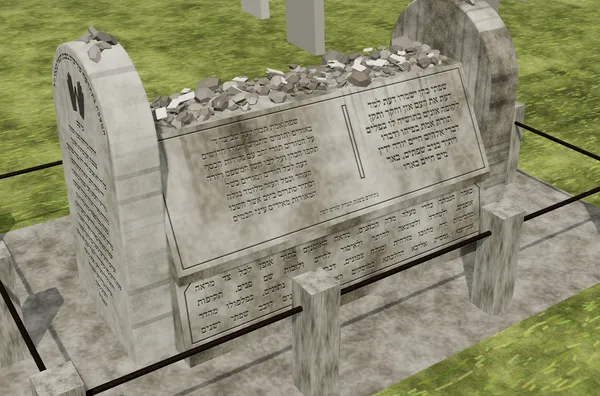
Over the Shach’s kever stands a matzeiva with a stone tumba shaped like a small house, set up in 1817 and renewed several times since. By the gate stands the tahara house, built in 1903. Inside hang the plaques with the names of the kedoshim of Holešov and the region.
The last levaya was in 1975. In the 1980s and again around 1997 the Beis HaChaim was repaired, and in 2020 the gate, the tahara house and the old gravedigger’s house were renewed — today a place to rest.
- 1,500+
- matzeivos
- ת״ז
- oldest legible matzeiva · 1647
- תקע״ז
- the tumba over the Shach · 1817
- 8,190
- square metres
Two Nights in the Jewish Street
The First World War has just ended, and Czechoslovakia is a few weeks old. On 29 Kislev 5679 — 3 December 1918, in the middle of Chanukah — soldiers of the new army come to Holešov. In a tavern they lay their plan, and at night they fall upon the Jewish street: houses and shops are plundered, the shul and the community offices wrecked.
Two Yidden are killed — Hermann Grünbaum and Hugo Grätzer, both just back from the trenches of the war. They are buried in the Beis HaChaim of Holešov. Hy"d.
Historians call it “the last pogrom in the Czech lands”. Afterwards the Yidden leave: from about 1,200 in 1914, only 273 remain in 1930.
“From the Ostrava region about 150 men in military uniform came to Holešov at night. In a tavern, over drinks, they won over some local soldiers, and together that night they wrecked Jewish shops and houses. Two Jews were killed.”
Národní listy, Prague, 7 December 1918Národní listy, 1918 · Wikimedia Commons
The Years of Churban
For six hundred years Yidden lived in Holešov. In four years the kehilla was no more.
- כ״ד אדר תרצ״ט15 March 1939
The Germans Come
The German army occupies Bohemia and Mehrin. The decrees begin: businesses are taken, Yidden are shut out of schools, of work, of the streets.
- קיץ תש״אSummer 1941
The New Shul Burns
The new shul is set on fire twice. The second time, in August, the firemen are not allowed to step in, and it burns down completely; by June 1942 the ruins are cleared away. The old shul — the Shach’s shul — is made a carpentry workshop and storehouse, and stays standing.
- שבט תש״גJanuary 1943
The Transports
The Yidden of Holešov are gathered in Uherský Brod, and from there sent in three transports to Theresienstadt; most are sent on to Auschwitz. Of the some 2,850 Yidden of the whole region in those transports, only 197 survived. The kehilla of Holešov is no more.
- תש״ד1944
The Chazzan
Jakub Michalowski, the chazzan of the kehilla, is murdered in Auschwitz. Hy"d.
The End of the New Shul
Antonín Reimer, a resident of Holešov, secretly filmed the new shul burning and its walls being torn down, on an 8 mm camera. Smoke rises, the towers fall one after another, German officers stand by, and the town looks on.
Filmed by Antonín Reimer · 1941–1942 · silent · 10½ minutes
In the tahara house at the Beis HaChaim hang the names of about 250 kedoshim of Holešov and the region. Hashem yinkom damam.
What Remained
The same bimah: painted around 1896, and photographed todayIsidor Kaufmann · public domain · Txllxt TxllxT · CC BY-SA 4.0 · Wikimedia Commons
- תש״ח1948
37 Yidden
After the war few come back. In 1948 there are 37 Yidden in Holešov; through the Communist years they leave one after another.
- תשכ״ד1964
The Old Shul Becomes a Museum
Between the wars the upper floor was turned into flats and the paintings plastered over. After the last tenant, in 1955, it is decided to restore it; from 1960 to 1964 the paintings are uncovered, and in September 1964 a museum opens there: “The Jews in Moravia”.
- תשנ״ד1994
Back to the Yidden
After the fall of Communism the shul is restored (1993–1994) and returned to the Jewish community. The town runs it to this day, with tours every hour.
When you can go in → - תשע״ו–תשע״ז2016–2017
The Beis Medrash and the Foundation
Part of the old beis medrash room beside the shul is restored. Where the new shul stood, its foundation is marked out in stone, with a monument and a sign.
- תש״פ2020
A New Gate
The entrance to the Beis HaChaim is renewed — a new gate, the tahara house, and the gravedigger’s house — with funds from the European Union and the town.
The Tziyun Awaits Yidden
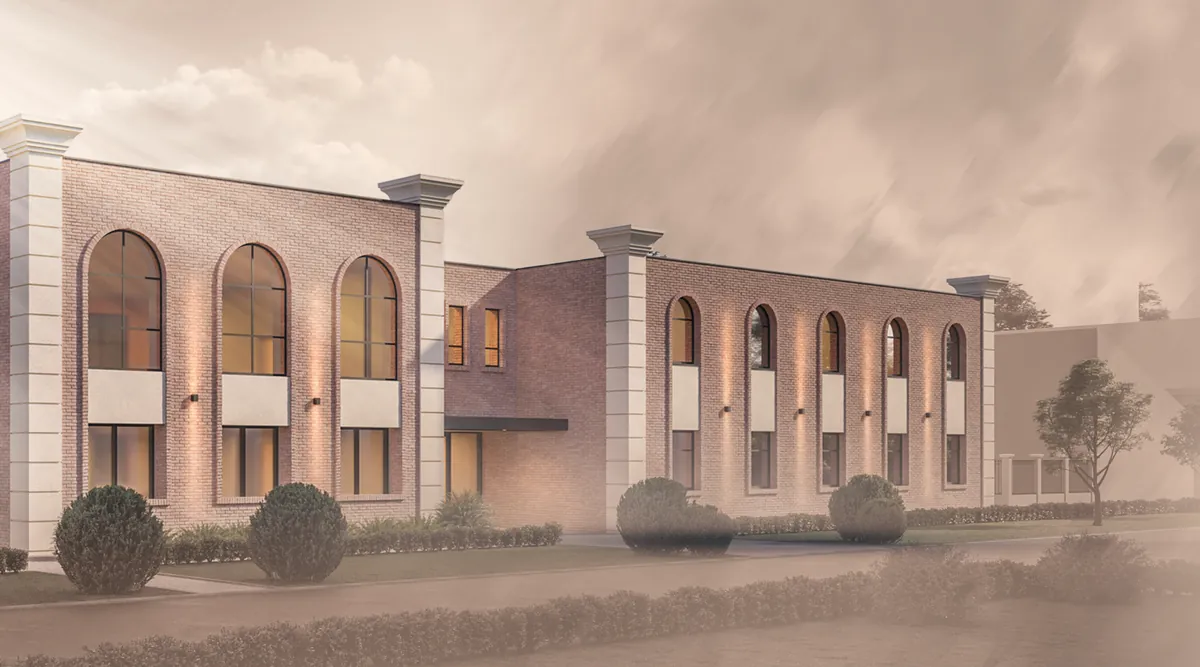
Every yahrzeit, Rosh Chodesh Adar, Yidden come to the Tziyun from all over the world — and all year round individuals and groups come. The vaad is building a Hachnosas Orchim house beside the Tziyun, so that everyone has where to daven, to rest, and to prepare for the Tziyun.
Sources
- Jewish Encyclopedia, “Holleschau” (G. Deutsch, J. Freimann, 1904)
- Encyclopaedia Judaica, “Holesov”
- Wikipedia: Šachova synagoga · Židovský hřbitov v Holešově · Holešov · הולשוב
- JewishGen, Cemetery Project: Holešov
- Národní listy, 7. 12. 1918
- M. L. Miller, “The Forgotten Pogroms, 1918”, Slavic Review, 2019
- holocaust.cz · Jewish Museum in Prague (Uherský Brod transports) · Yad Vashem
- Seznam Zprávy, 21. 7. 2020
The years and names are taken from the sources above. Anyone who knows more — or knows otherwise — please write to the vaad.
Lay a Brick
by the Shach
Every dollar becomes a brick in the building beside the Tziyun — a place where Jews will learn, daven, and rest, and where Kohanim will finally be able to stand before the Shach. The zechus remains yours for generations. Your receipt arrives right away by email.
For a dedication or any question: 347.389.2180
Tax ID 39-3019992